Houston Pest Problems After Heavy Rain: Prevention and Post-Flood Inspection
Executive Summary for Greater Houston Residents
The Greater Houston area's flat coastal plains, extensive bayou networks, and subtropical moisture make it uniquely susceptible to extreme post-rain pest displacements. Saturated soils and swollen municipal drainage systems force American cockroaches into residential plumbing, produce floating fire ant rafts on floodwaters, ignite explosive mosquito breeding cycles, and expose damp framing to Formosan subterranean termites. Prompt post-storm inspections and preventative barriers protect both structural integrity and family safety. Discover our local solutions on our dedicated Houston, TX pest control page.
1. Bayou Hydrology & Insect Displacement Dynamics
With a clay-heavy soil profile and an elevation barely above sea level across Harris, Fort Bend, and Montgomery counties, rainfall from tropical disturbances and severe thunderstorms drains slowly into Buffalo, Brays, White Oak, and San Jacinto bayous. When rainfall rates exceed 2 to 3 inches per hour, the water table reaches ground level almost instantaneously.
Underground insect colonies rely on subterranean air chambers to survive. As rising ground moisture displaces oxygen in soil burrows, sewer channels, and tree hollows, millions of insects flee upward toward high ground. In suburban neighborhoods, the highest, driest structures available are residential slab foundations, brick veneer wall cavities, crawlspaces, and attics.
2. The Top Four Post-Storm Pests in Houston
Following tropical storms, hurricanes, or heavy Gulf Coast deluges, Houston homeowners face four primary biological threats:
Facing Post-Storm Pests in the Houston Area?
Connect with licensed Houston pest exterminators who specialize in post-flood exterior barrier treatments, plumbing trap treatments, and structural moisture assessments.
CALL HOUSTON PEST RESPONSE3. Immediate Post-Rain Homeowner Inspection Checklist
Take these proactive steps within 24 to 72 hours after heavy rainfall ceases across Southeast Texas:
Prime All Indoor Plumbing P-Traps
Run tap water for 60 seconds down every infrequently used guest bathroom sink, tub, floor drain, and laundry basin. Replenishing the water barrier in the trap prevents sewer cockroaches from crawling up dry pipes into living quarters.
Execute the "Tip & Toss" Rule
Within 48 hours of rain clearing, tip over standing water trapped in flowerpot saucers, birdbaths, tarps, children's toys, and tire swings. Clearing these containers terminates mosquito larvae before adult pupation occurs.
Avoid Touching Floating Debris
If standing water remains on your lawn, wear protective rubber boots and never handle floating clumps of organic matter or branches barehanded, as they frequently harbor defensive fire ant rafts or displaced cottonmouth snakes.
Measure Crawlspace & Baseboard Moisture
If your home flooded or took in wind-driven rain, use commercial dehumidifiers and schedule a structural moisture evaluation. Wood with sustained moisture levels above 20% quickly attracts dry rot fungi and wood-boring pests.
4. When to Call a Professional Exterminator
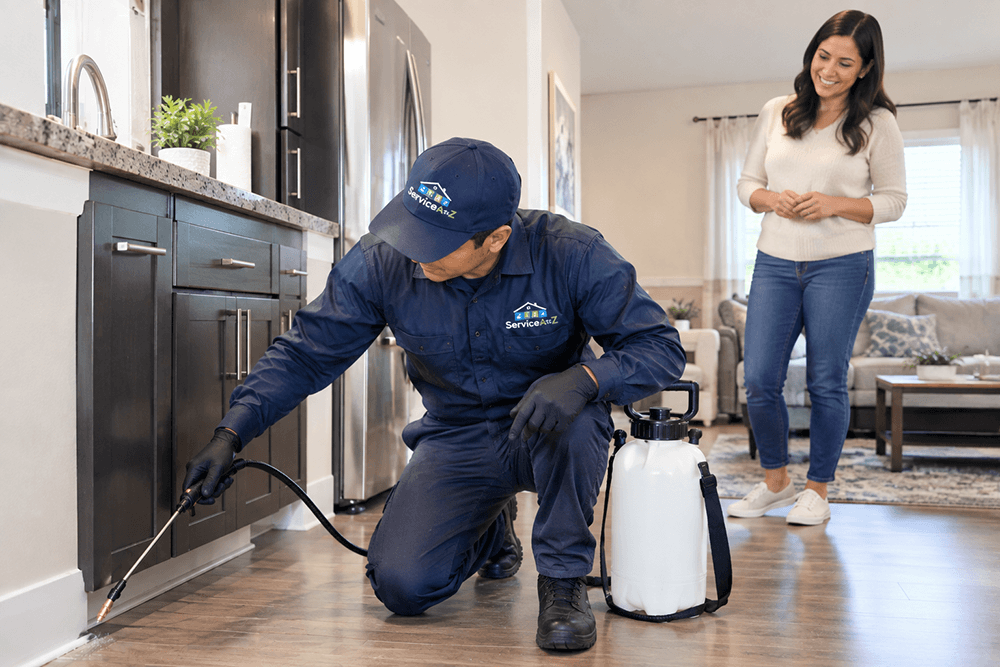
While homeowners can manage container tipping and plumbing priming, widespread post-storm insect invasions often outpace retail remedies. Professional exterminators deploy specialized equipment:
- Micro-encapsulated Perimeter Sprays: Modern synthetic pyrethroid formulations resist wash-off, binding to saturated foundation bricks and concrete to re-establish long-term barrier defense.
- Backpack Misting & Larvicidal Brikettes: Fast knockdown of biting mosquito swarms in dense foliage combined with biological Bacillus thuringiensis israelensis (Bti) dunks for non-drainable retention swales.
- Thermal Imaging & Acoustic Termite Probing: Non-destructive moisture meters and acoustic sensors that locate hidden Formosan termite nests inside damp wall framing before structural sagging begins.
For urgent pest emergencies following severe storms, consult our emergency pest control connection.