Targeted Pest Solution
Centipede & Millipede Removal & Crawl Space Sealing
Keep multi-legged crawlers out of your home. Professional treatment for house centipedes and seasonal millipede swarms.
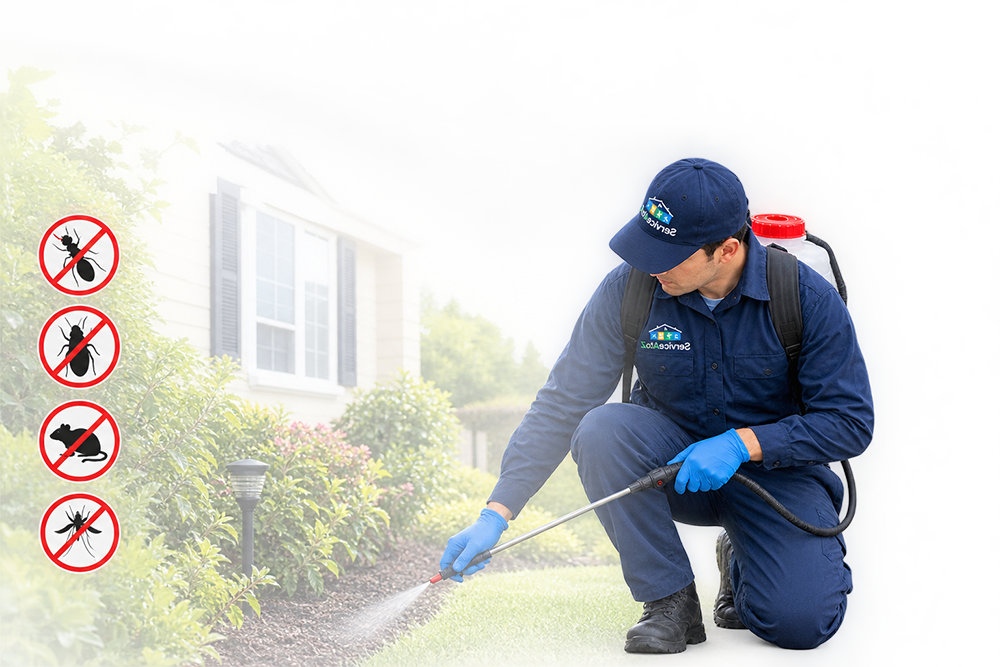
Keep multi-legged crawlers out of your home. Professional treatment for house centipedes and seasonal millipede swarms.
House centipedes and outdoor millipedes are multi-legged arthropods that thrive in damp, humid micro-climates. While centipedes actively hunt insects using venomous fangs (forcipules), millipedes migrate indoors by the thousands during heavy rains or drought periods. Professional treatment addresses both damp harborage zones and perimeter exterior entryways.
Technicians pinpoint subterranean moisture hot-spots, damp crawlspaces, leaking plumbing traps, and excess mulch layers driving centipede and millipede survival.
Micro-encapsulated residual barriers are applied along foundation walls, sub-slab entry points, door thresholds, and window wells to block incoming pests.
Centipedes feed on spiders, silverfish, and roach nymphs. Eliminating underlying prey insects deprives centipedes of their primary food supply.
Desiccant dust formulations (silica/diatomaceous) are injected into wall voids, behind baseboards, and inside utility voids for non-toxic long-term control.
Understanding the distinction between house centipedes (*Scutigera coleoptrata*) and millipedes (*Diplopoda*) is key to effective home protection. House centipedes possess 15 pairs of long, thread-like legs and move rapidly across walls and ceilings. Although centipedes rarely bite humans unless crushed, their venomous bite can cause mild localized swelling similar to a bee sting.
Millipedes are slow-moving, worm-like arthropods with two pairs of legs per body segment. When disturbed, millipedes curl into tight spirals and secrete defensive chemical fluids that can stain floors and irritate skin. Heavy rainfall forces millipedes out of saturated garden soil into basements and living quarters.
Speak directly with experienced pest control technicians for targeted home defense.
We evaluate crawlspace ventilation, foundation cracks, mulch depth, and damp basement corners to identify breeding zones.
A 3-foot up, 3-foot out perimeter barrier band is applied using micro-encapsulated insecticides that remain potent in damp conditions.
Precision wall void dusting and baseboard sealing prevent centipedes from hiding inside wall framing and under floorboards.
We recommend dehumidification strategies, gutter downspout extensions, and mulch setbacks to deter future infestations.